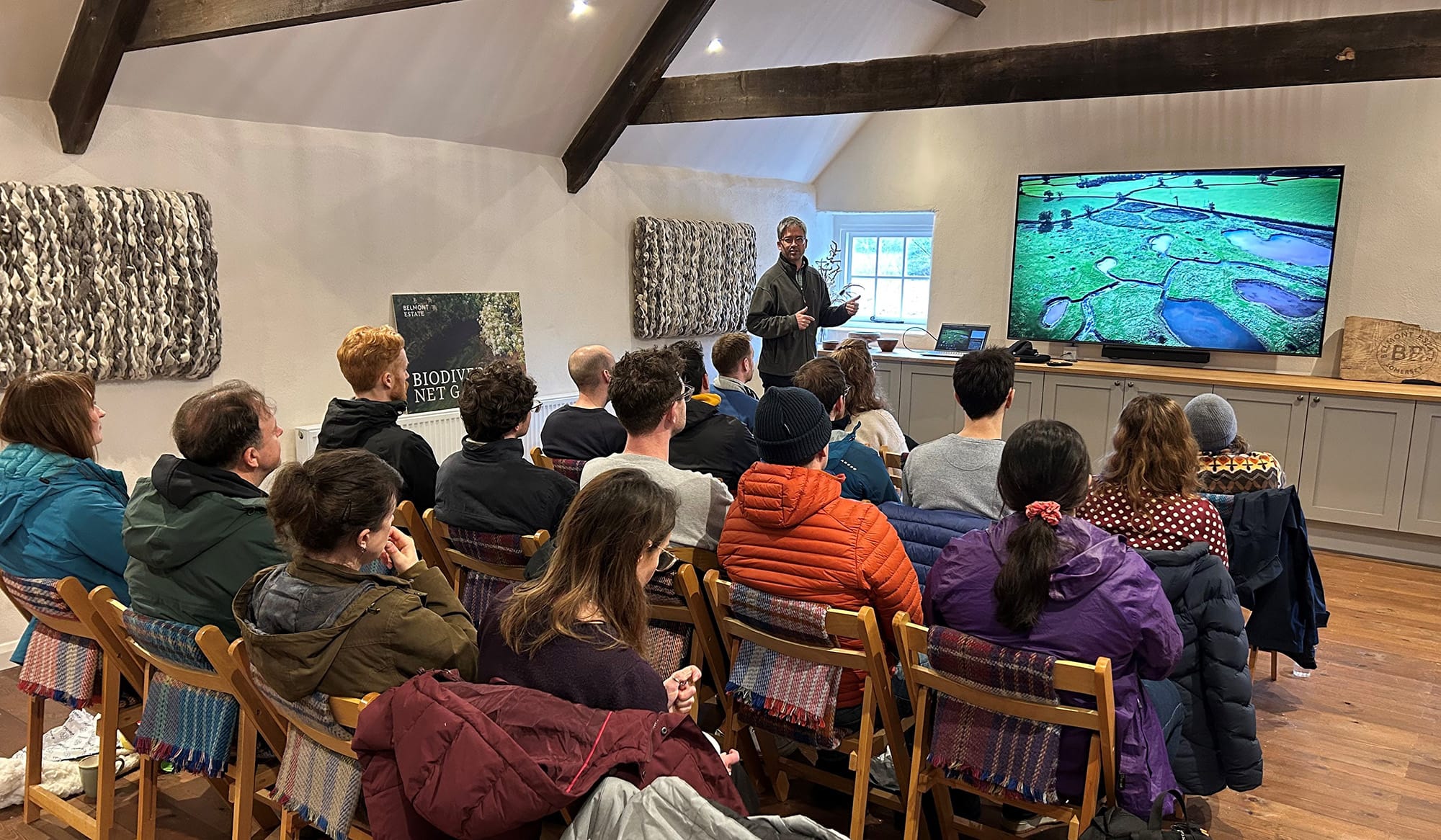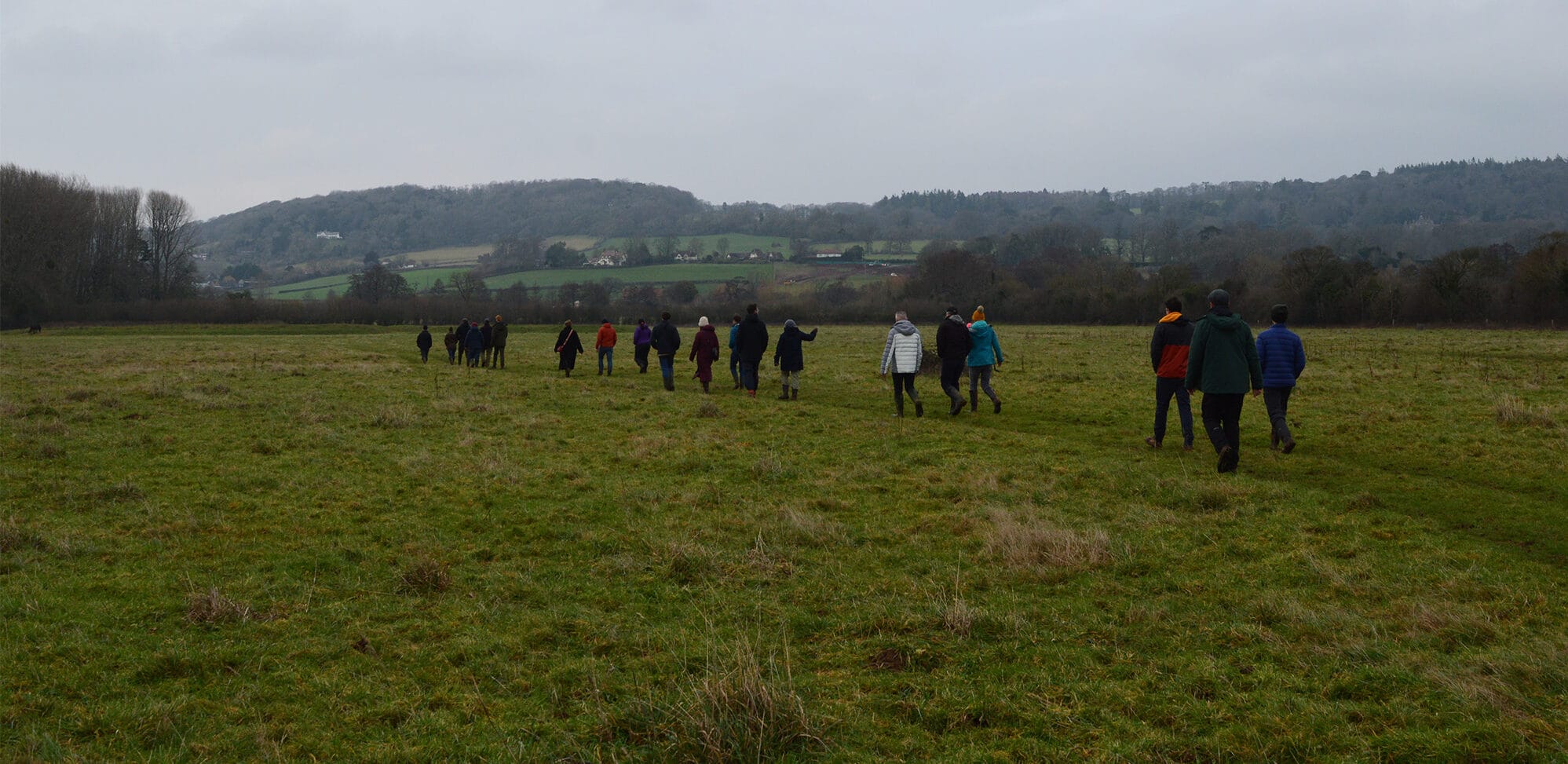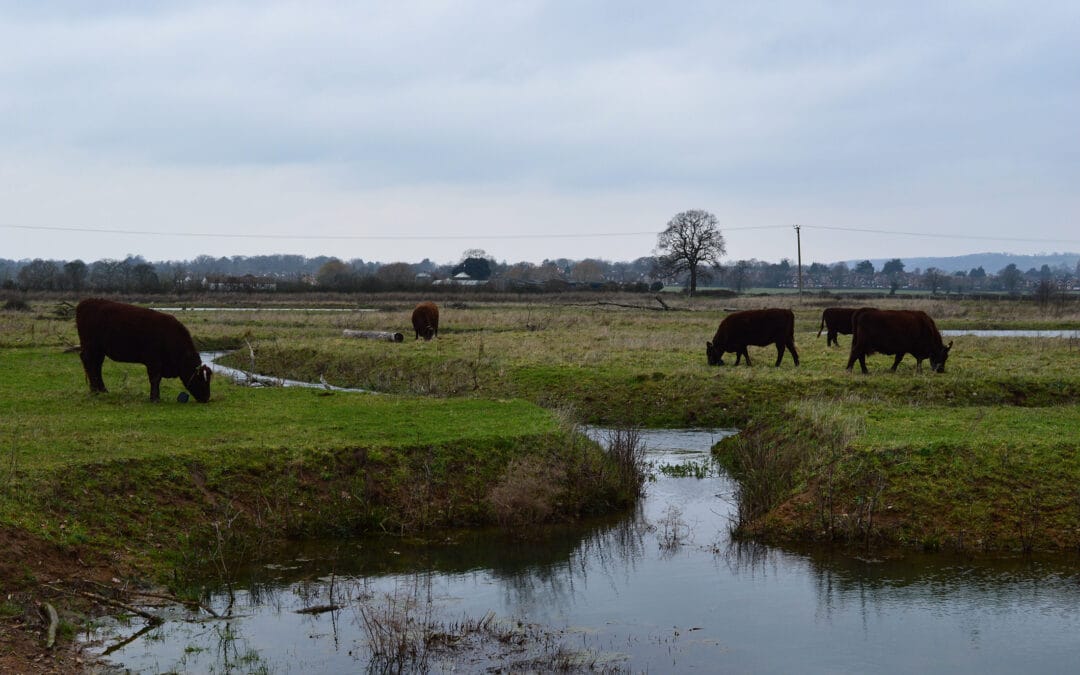
Images: Taken on TLP’s site visit.
Our team was fortunate to be invited to visit Belmont Estate, just a short trip from our office in North Somerset, to see firsthand how developer-funded Biodiversity Net Gain (BNG) credits are translating into meaningful habitat creation. Belmont is the region’s first off‑site BNG provider to secure a 30‑year conservation covenant, enabling long‑term delivery of over 372 habitat units across Watercress Farm, including lowland meadow, mixed scrub, woodland and river habitats. Their rewilding and rewetting efforts have already supported over 2,000 recorded species and counting, demonstrating measurable ecological uplift at a landscape scale.
Following a passionate talk by the Estate team, we then walked around Watercress Farm, we observed naturally regenerating alder and willow, biodiverse wet meadows, species-rich grassland and extensive mixed hedgerows, with each field developing its own character through low‑intervention land management. The estate’s rewetting project has transformed degraded farmland into thriving wetland habitat, supported by sensitive grazing with Devon Ruby cattle and Exmoor ponies to maintain structural diversity. There was also plenty of evidence that the Estate’s three Iron Age pigs had been busy with their ground clearance work.
For our multi-disciplinary team, working daily with BNG policy supporting planning applications and habitat design, the visit was particularly valuable. It provided real-world insight into how off‑site BNG units are created, verified and sustained for the full 30‑year term, reinforcing the importance of high-quality habitat baselines and long-term stewardship. It also emphasised how land management can be dynamic, and it is always great to experience such passionate and knowledgeable staff. Experiencing Belmont helps us better guide clients through BNG requirements, align our designs with meaningful ecological outcomes, and ensure that the schemes we support genuinely contribute to nature recovery.
For our landscape team, it is a great precedent moving forwards with projects promoting sustainable land management for the future, such as our work at Ebdon Farm alongside the Avon Wildlife Trust.