
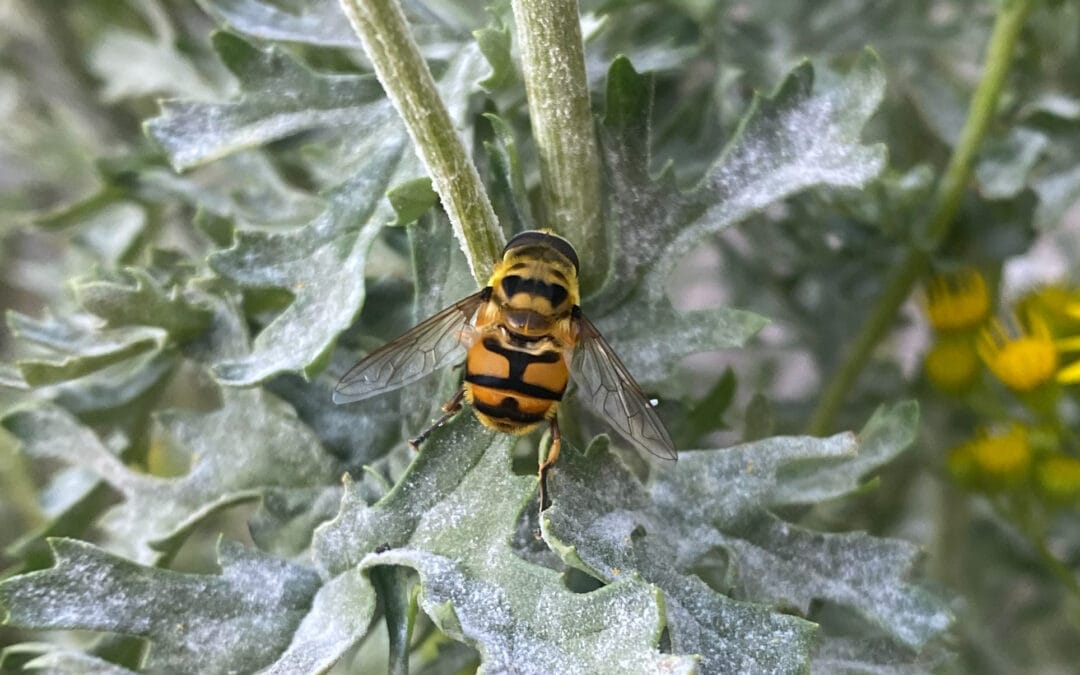
Image: Myathropa florea, a Batman hoverfly hatched from one of the pupas. Named for the shape behind the head.
Matt, our Assistant Ecologist, has been taking part in the Buzz Club’s Hoverfly Lagoons project, searching for hoverfly larvae and pupae by our offices at Long Ashton Business Park. The project helps researchers learn more about hoverflies, an often-overlooked group of pollinators that play an important role in supporting wildflowers and crops.
Many hoverfly species lay their eggs in water-filled tree rot holes or other wet, organic-rich habitats. During surveys, Matt found a promising location beside a pond in a grazing field, where cattle regularly come to drink. These damp and nutrient-rich conditions provide ideal habitat for hoverfly larvae. Last week we found four hoverfly pupae, showing that hoverflies are successfully breeding on site.
Some hoverfly larvae are known as ‘rat-tailed maggots’ because of their remarkable telescopic breathing tube. Living in shallow water and decaying organic matter, they use this tube like a snorkel, allowing them to breathe while submerged. Once fully grown, they develop into pupae before emerging as adult hoverflies. It’s a fascinating reminder that even small habitats can support important pollinators, helping to boost biodiversity right next to our offices and the wider landscape.
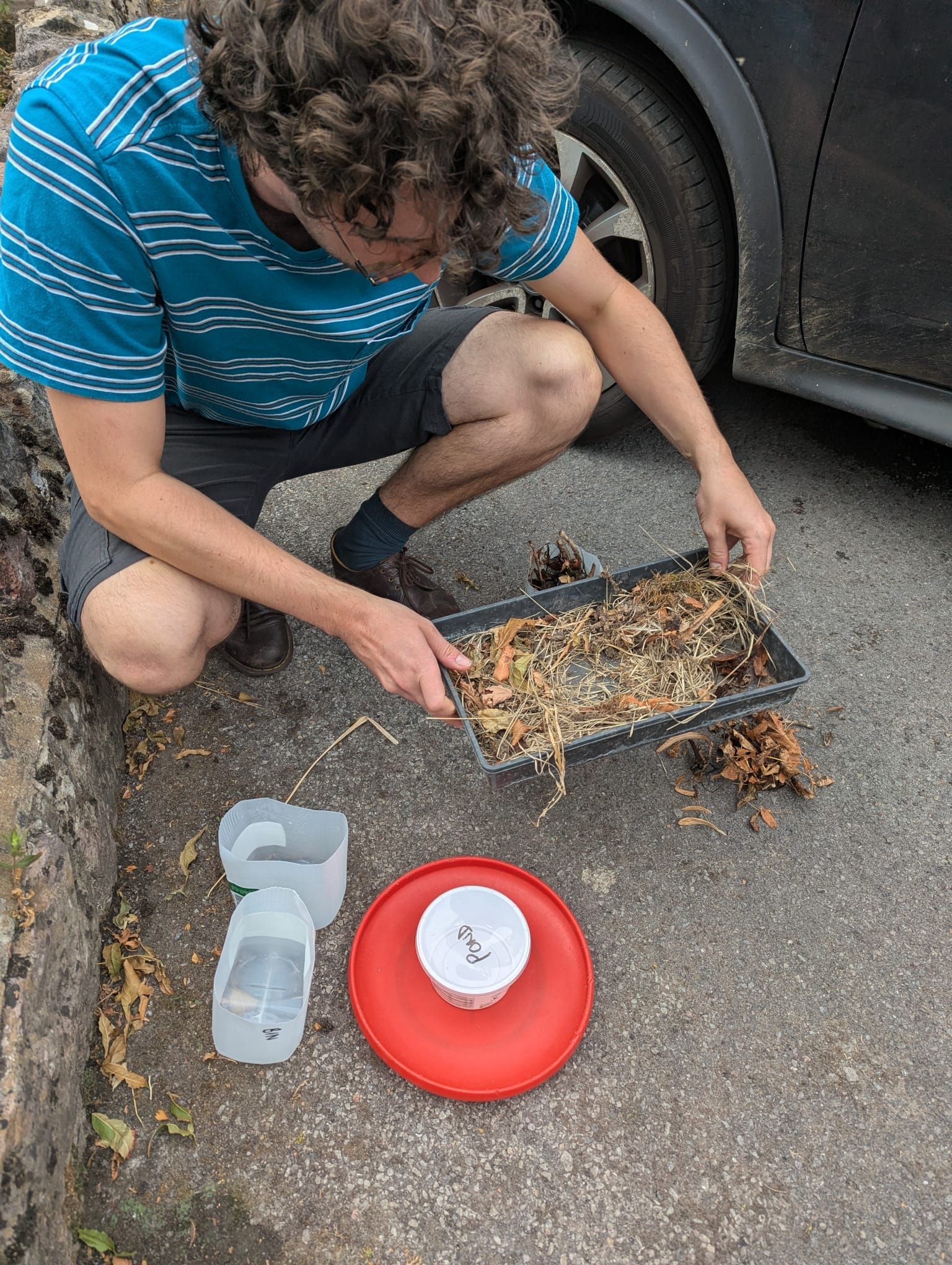
Image above: Matt surveying for pupa.
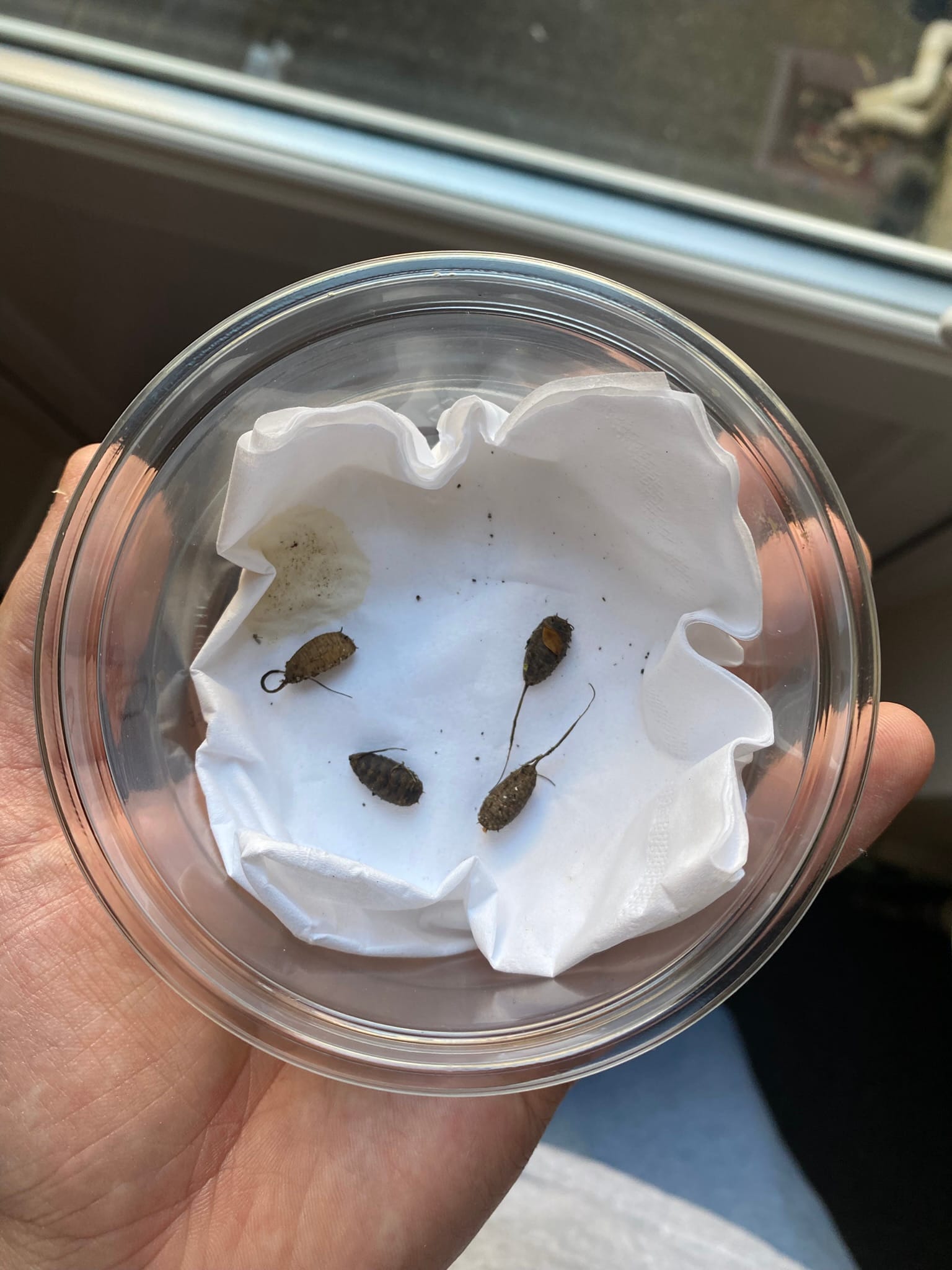
Image above: The ‘rat-tailed maggot’ pupae…